


Public Art Auction
LOT 060
Edgar DEGAS
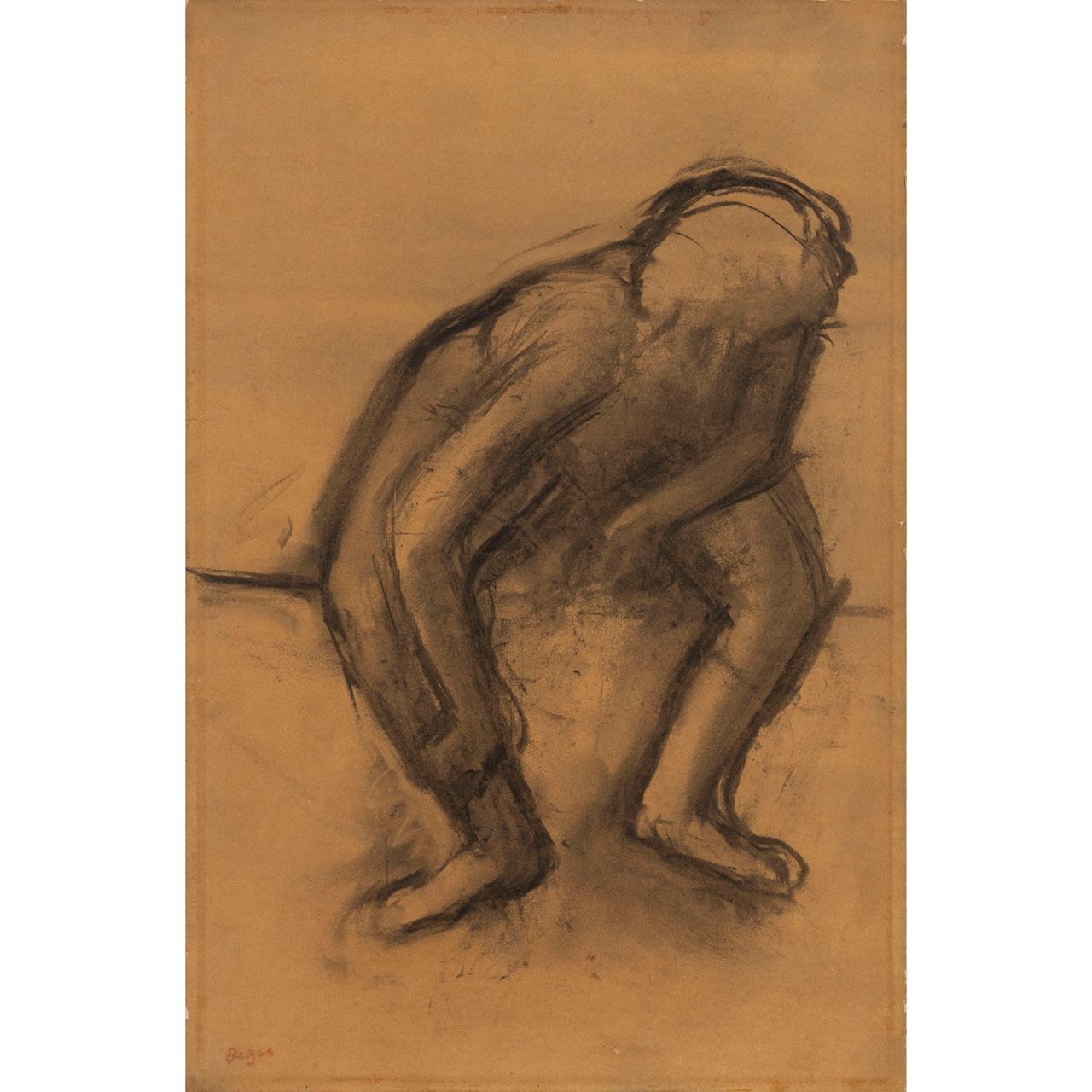
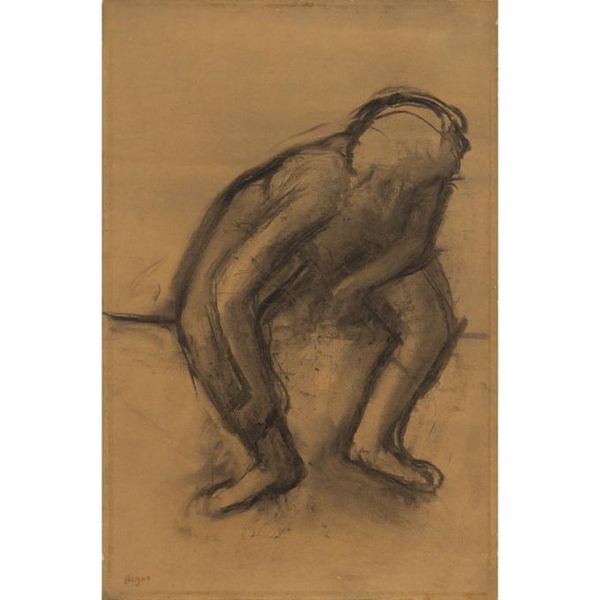
FEMME ASSISE (SEATED WOMAN)
| Technique | charcoal on paper mounted on panel |
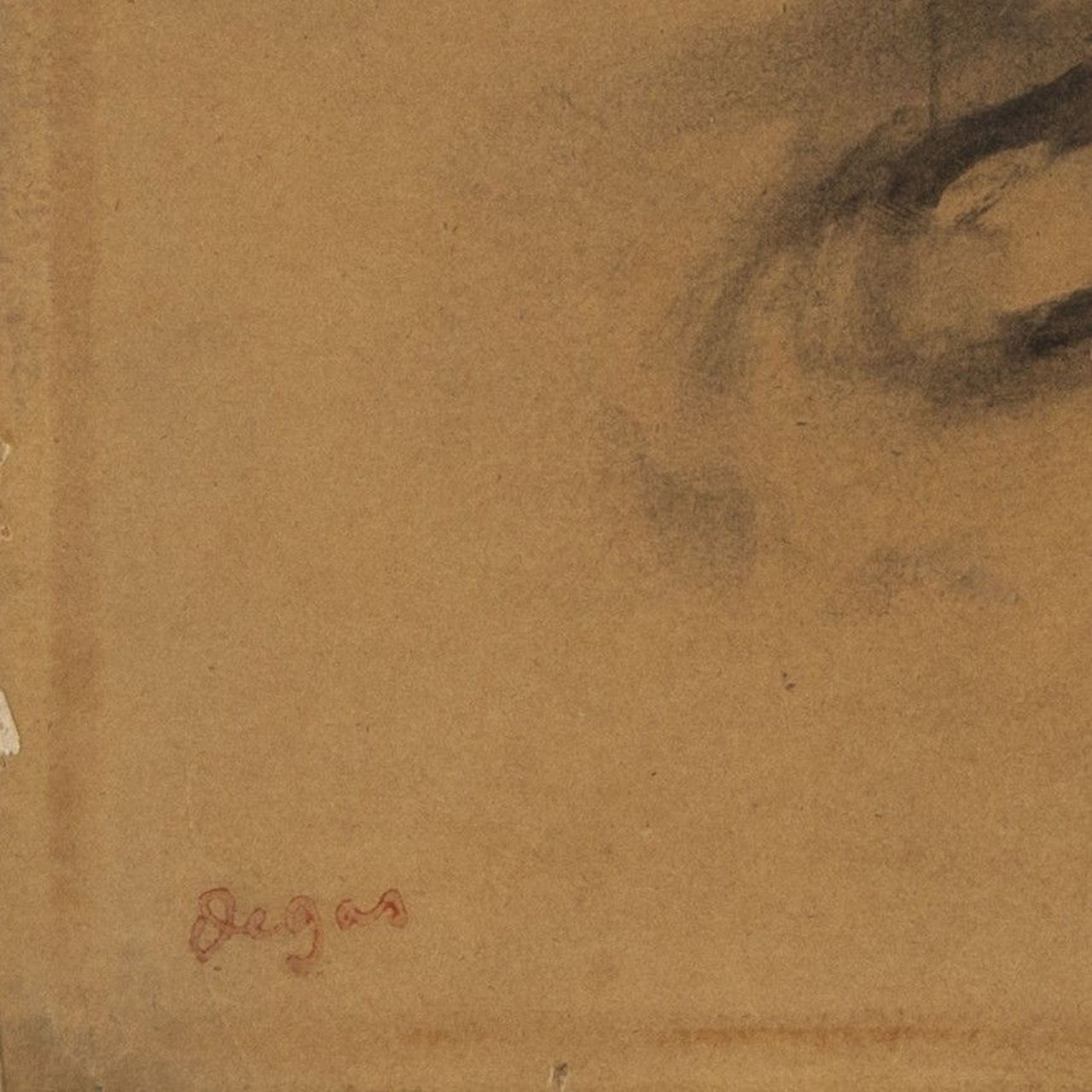
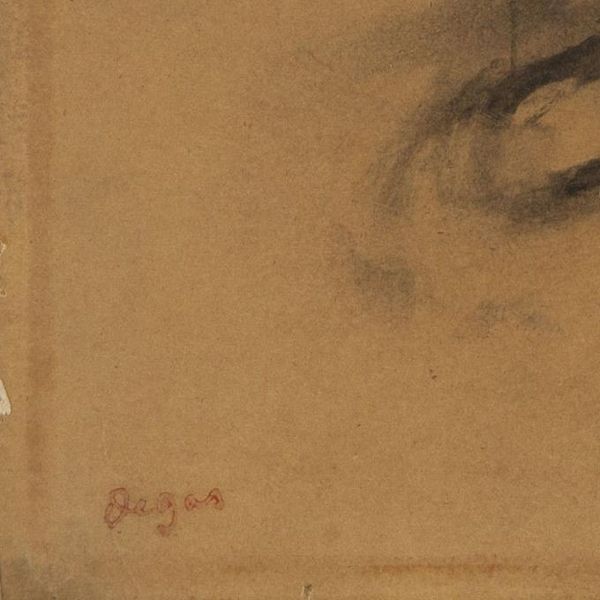
| Signature | stamped signature on the lower left |
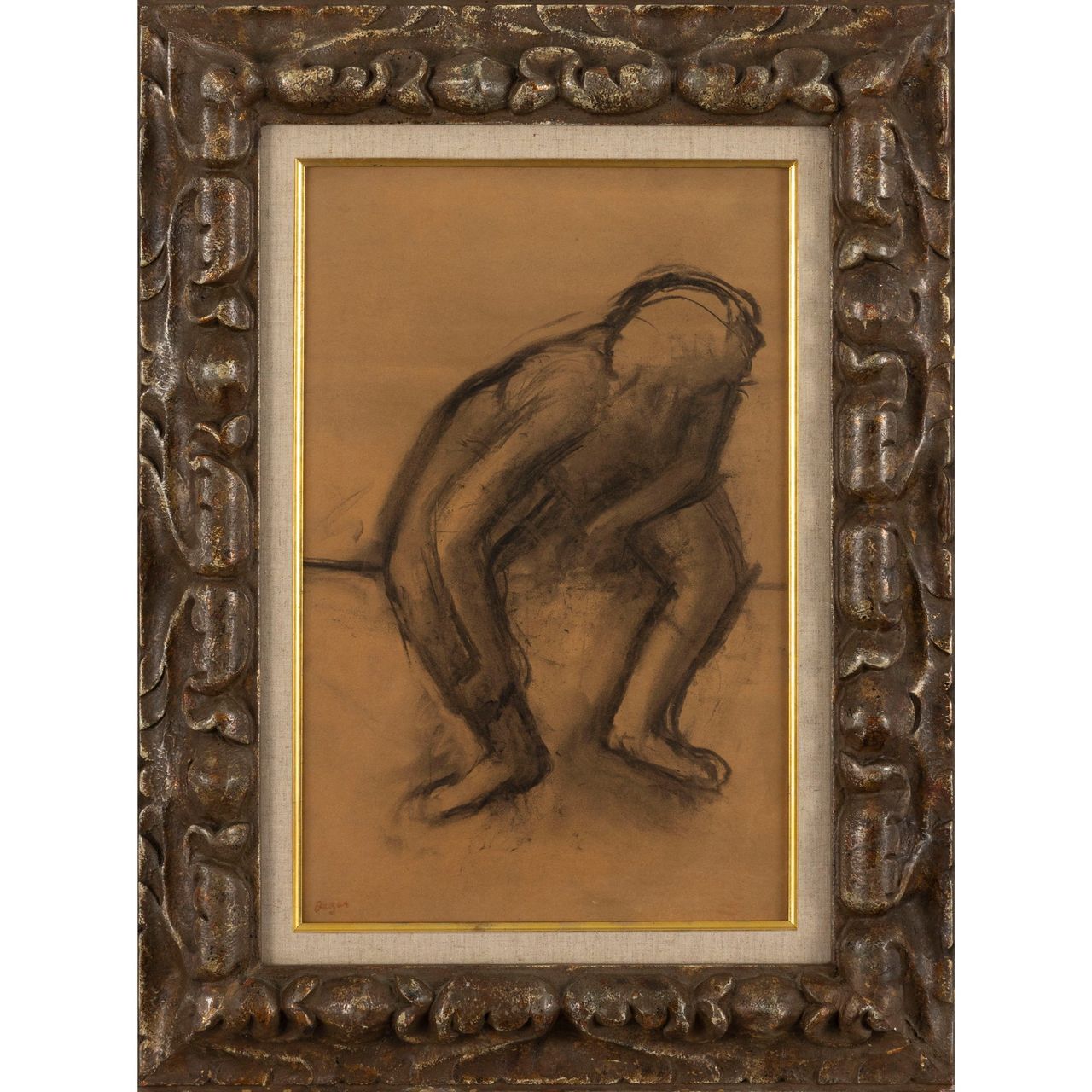
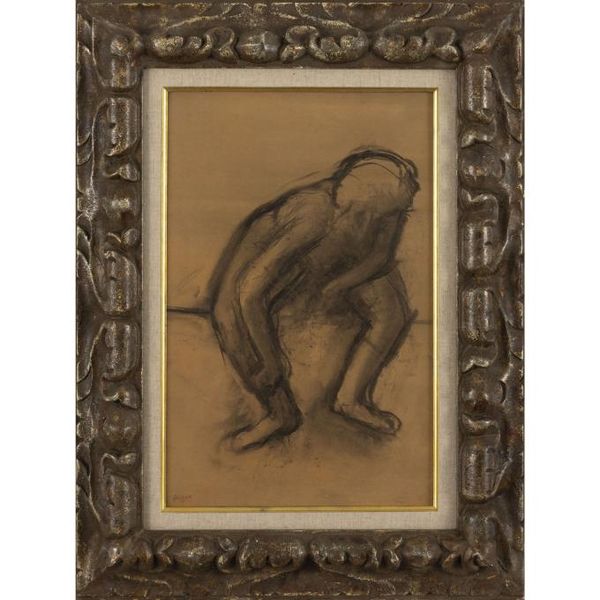
| Frame | framed |
| Size | 44.0×29.0 cm |
| Certificate | certificate of authenticity by Paule Cailac |
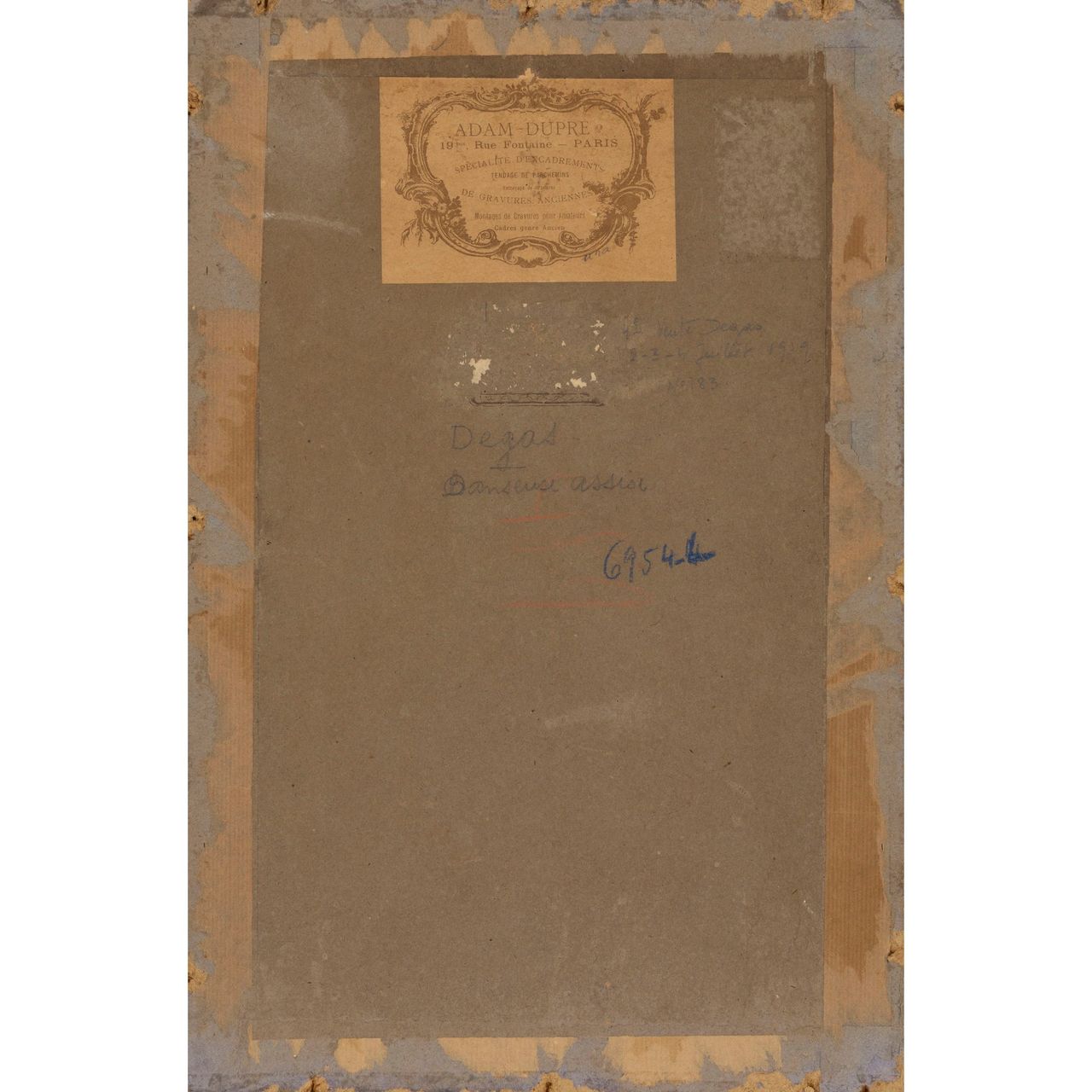
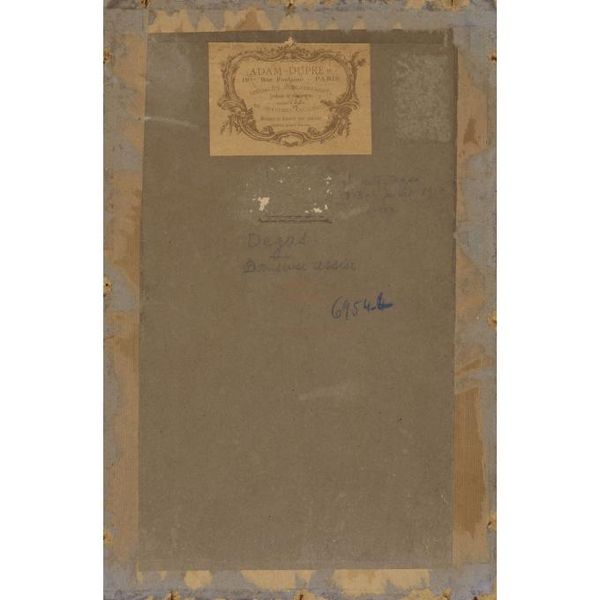
| Literature | "Catalogue des tableaux, pastels et dessins par Edgar Degas et provenant de son atelier : 4me vente", Paris, 1919, p. 157, no. 183 |
| Provenance | Fourth Atelier Degas Sale, Galerie Georges Petit, Paris, July 3, 1919, lot 183 Seibu PISA, Tokyo Private Collection, Japan |
HIGHLIGHT
This work is a rare and remarkable charcoal drawing by the great master Edgar Degas. The composition depicts a seated dancer with her head lowered, extending her hips while holding her legs apart with both hands. The elongated limbs are captured with powerful, expressive lines, while the soft blending effects characteristic of charcoal skillfully convey the volume of the body and the graceful suppleness of the figure.
Degas is renowned as one of the most accomplished draftsmen among artists of his generation. In addition to oil painting, he employed a wide range of techniques, including charcoal and pastel, leaving behind a vast body of works. His keen ability to observe and capture fleeting movements of the human figure and animals, together with his exceptional draftsmanship, is clearly evident in the extensive collection of works that have survived to the present day.
Dancers were among the most important and beloved subjects throughout Degas’s career. He frequently visited the Paris Opéra, where he repeatedly depicted not only dancers performing on stage but also their natural gestures during rehearsals and backstage moments. What fascinated Degas was not merely the beauty of the theatrical performance, but rather the movement of groups, the forms of the human body, and the constantly changing physical gestures themselves. Through years of careful observation and countless studies, he developed a remarkable ability to capture a model’s fleeting movements and the subtle tension of the body, preserving them on paper with extraordinary precision.
Furthermore, Degas’s distinctive compositions and approach to form are widely considered to have been strongly influenced by Japanese ukiyo-e prints. Like his contemporaries Vincent van Gogh and Claude Monet, Degas held a deep interest in ukiyo-e and was known to have collected numerous examples. By incorporating the bold compositions and unconventional, cropped perspectives found in ukiyo-e, he sought to portray figures in natural, instinctive gestures and poses, unaware of being observed.
Through its exceptional draftsmanship and refined sense of composition, this work exemplifies the essence of Degas’s artistic achievement. Centered on one of his most iconic subjects, the dancer, this charcoal drawing embodies his lifelong exploration of human movement and form, making it a highly significant and valuable work from a scholarly perspective.
CONDITION REPORT