

Public Art Auction
LOT 085
NAMIKAWA Yasuyuki
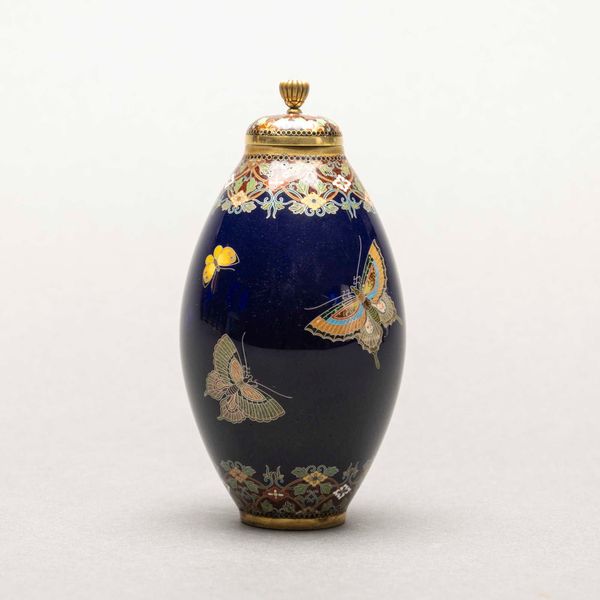
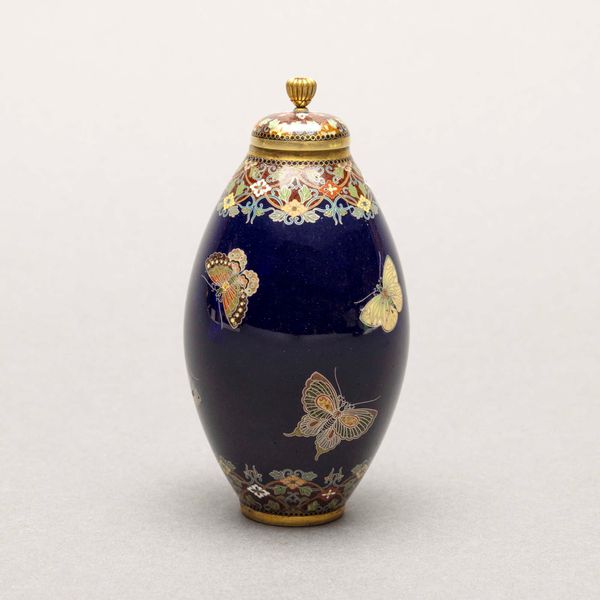
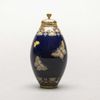
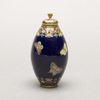
CLOISONNÉ ENAMEL COVERED VASE WITH BUTTERFLY DESIGN
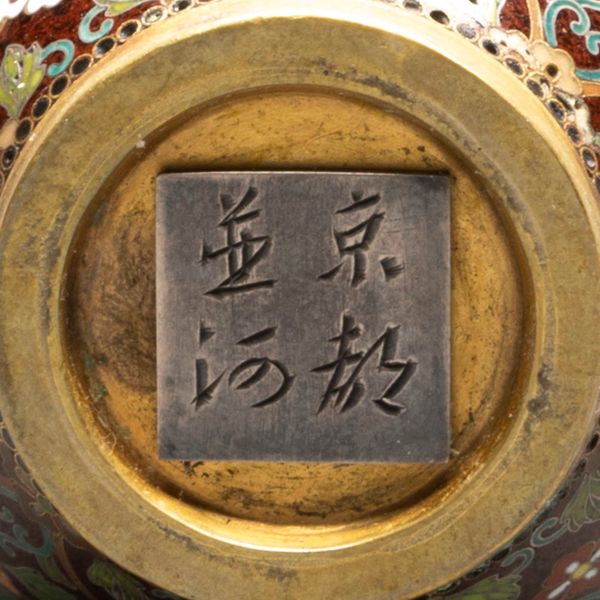
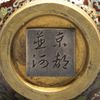
| Signature | incised “Kyoto Namikawa (京都並河)” on the underside |
| Size | h10.7×φ6.0 cm (栓含む/including stopper ) |
HIGHLIGHT
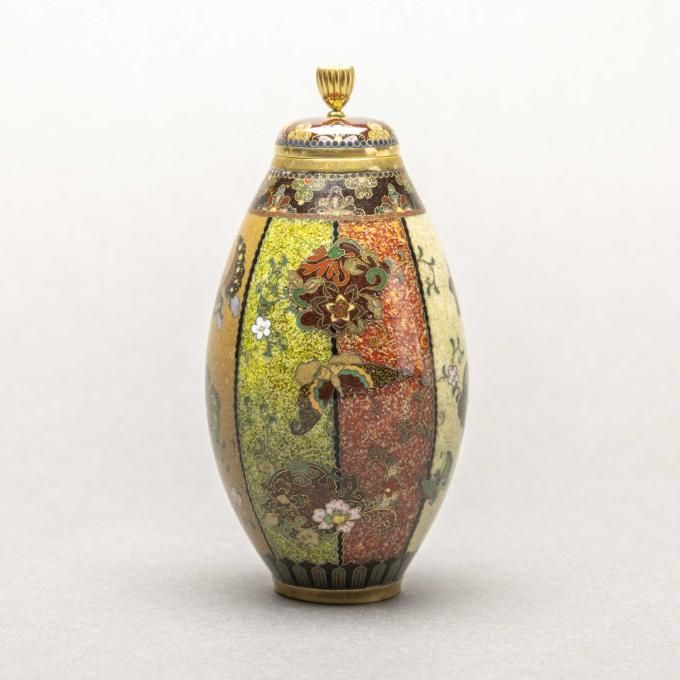
Cloisonné is a decorative metalworking technique in which vitreous enamel is fired onto a metal body such as copper or silver. Techniques include wired cloisonné (yūsen shippō), in which metal wires are used to outline patterns, and wireless cloisonné (musen shippō), which creates painterly effects without wires. In Japan, cloisonné production began in the late Edo period and developed significantly during the Meiji era as an export art, gaining international recognition for its refined craftsmanship and rich coloration.Within this context, Namikawa Yasuyuki (1845–1927), who was based in Kyoto, established himself alongside Namikawa Sōsuke as one of the leading figures of modern Japanese cloisonné. Yasuyuki began producing cloisonné works in the early Meiji period and achieved high acclaim at domestic and international expositions. In 1896, he was appointed an Imperial Household Artist, securing his reputation. He is particularly celebrated for elevating the technique of wired cloisonné to an extraordinary level of refinement, characterized by meticulous metal wires and transparent enamels that create serene and balanced decorative compositions.These two works (lot 85 & 86) exemplify Namikawa’s mature style. The softly ovoid vessel is enveloped in a deep and uniform dark blue ground, upon which two butterflies are gracefully arranged. The butterflies’ wings are delicately divided by extremely fine metal wires, while subtle and nuanced enamel tones are carefully fired within each compartment, achieving a sophisticated harmony between precise contours and gentle coloration. Particularly noteworthy is the expansive undecorated background, which functions as a deliberate negative space, emphasizing the butterflies while imbuing the overall composition with a quiet sense of tension. In contrast, the neck and foot are adorned with intricate floral arabesque motifs, clearly articulating a compositional balance between central restraint and peripheral ornamentation. This equilibrium between austerity and decoration reflects the fusion of refinement and Japanese design sensibility characteristic of Meiji export art, and the work may be regarded as an outstanding example that fully embodies the essence of Namikawa’s art through the masterful integration of line, color, and space within the constraints of wired cloisonné.