


Public Art Auction

LOT 077
ITO Jakuchu
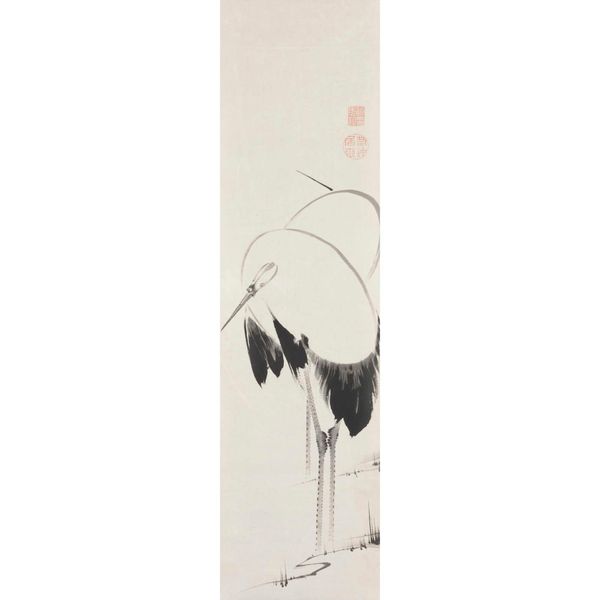
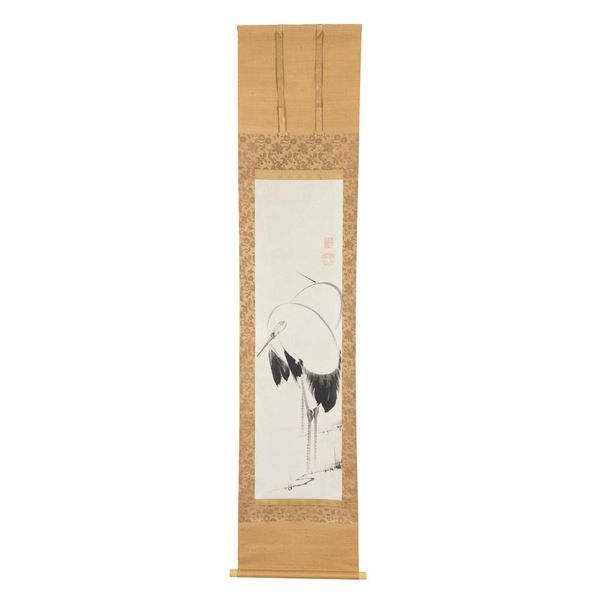
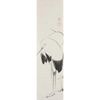
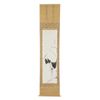
PICTURE OF TWO CRANES
| Technique | ink on paper |
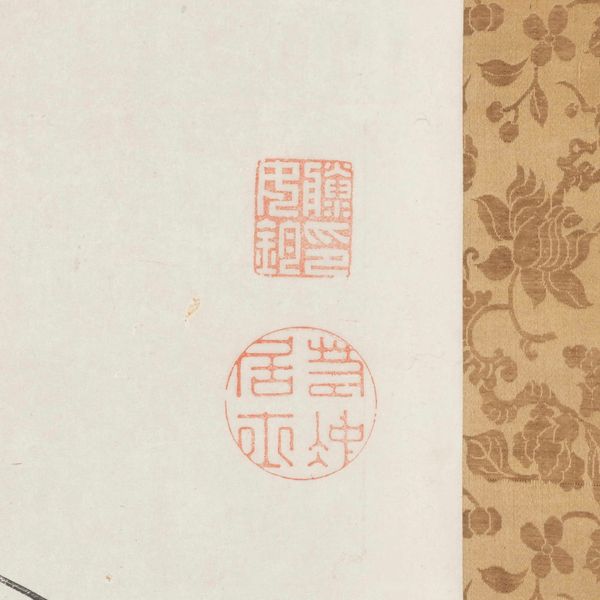
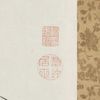
| Signature | stamped on the upper right |
| Frame | scrolled |
| Size | 表具 : 186.0×46.5 cm |
HIGHLIGHT
Ito Jakuchu (1716–1800) was a painter active in Kyoto during the mid-Edo period. Born as the eldest son of a greengrocer, Masuya, located on Nishikikoji Street in Kyoto, he inherited the family business while cultivating his painting skills. Around the age of forty, he handed over the business to his younger brother and thereafter devoted himself fully to painting. Initially trained in the Kano school, he further deepened his practice through the study of Chinese painting, eventually establishing a distinctive style characterized by meticulous observation and a strong emphasis on composition. His close association with the Zen monk Daiten Kenjo of Shokoku-ji Temple also profoundly influenced the spiritual dimension of his work. Until his death in 1800, Jakuchu produced numerous masterpieces, including the celebrated series Colorful Realm of Living Beings, securing his unique position in the history of Japanese art.
This work is a fine example in which Jakuchu, through subtle gradations of ink and bold composition, evokes the fundamental beauty of life. Most striking is the elegant circular form created by the two cranes nestled together. Jakuchu reduces the bodies of the cranes to an extreme abstraction, capturing them with a single, unhesitating curve. This refined sense of form possesses a modernity that resonates even today, leaving a lasting impression on the viewer.
The contrast between movement and stillness throughout the composition is masterfully handled. The bodies of the cranes are intentionally left unrendered, allowing the untouched white of the paper to convey purity and quietude. In contrast, the tail feathers are executed in rich, dark ink, lending weight and vitality to the composition. This interplay of restraint and emphasis suggests an inner dynamism within apparent stillness.
The carefully considered spatial composition is equally noteworthy. By leaving a generous expanse of blank space in the upper portion and positioning the cranes slightly lower, Jakuchu achieves both a sense of calm openness and subtle tension. The slender legs, drawn with minimal lines and with the feet omitted, blur the boundary between form and void, further accentuating Jakuchu’s characteristic economy of expression.
While cranes have long been cherished as auspicious symbols of longevity and prosperity, in this work they transcend mere decorative symbolism and are elevated into a sublime artistic expression. This painting may be understood as a crystallization of the invisible vitality Jakuchu sought to capture, rendered through the most restrained yet eloquent brushwork.
CONDITION REPORT