


Public Art Auction
LOT 059
ITO Shinsui
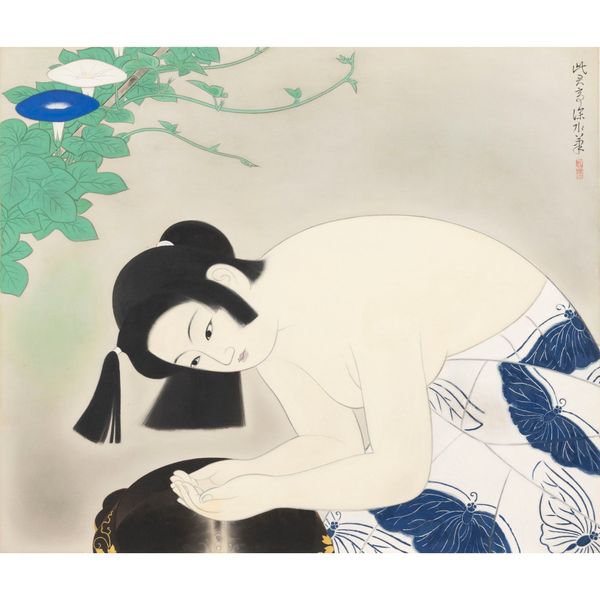
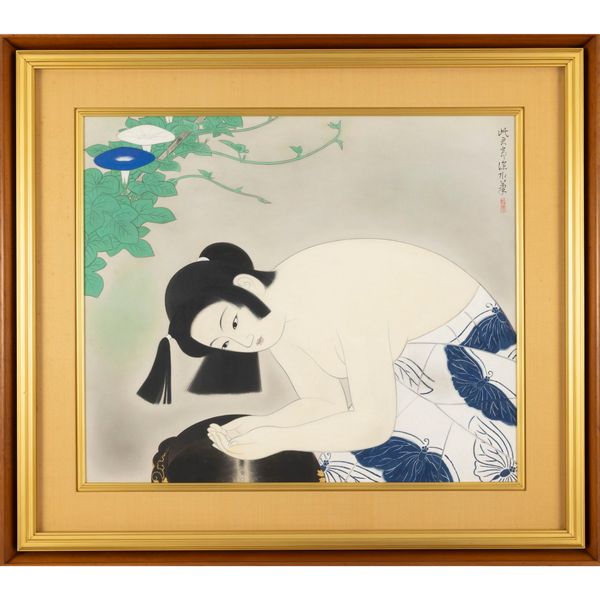
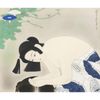
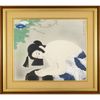
MORNING
| Technique | color on silk |
| Signature | signed and stamped on the upper right |
| Frame | framed |
| Size | 74.7×88.0 cm |
| Year of the work | 1938 |
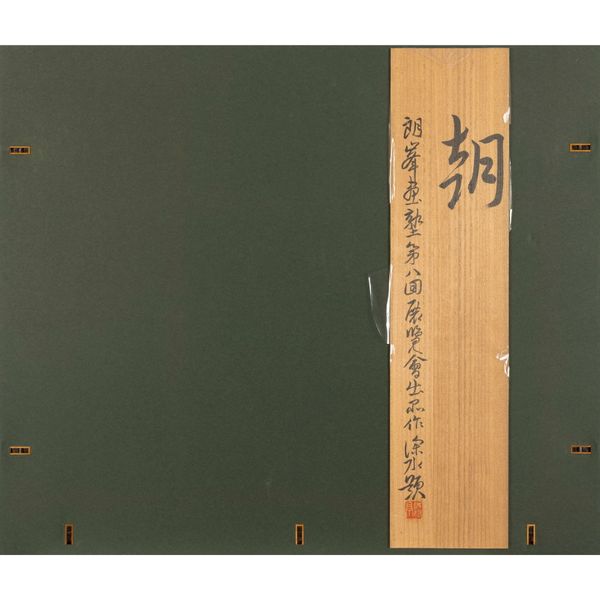
| Certificate | certificate of authenticity by Toobi Certification for Fine Arts; signed, titled and stamped by the artist on the original plaque |
| Literature | “Complete Works of Itō Shinsui Vol. 2", Shueisha, 1982, no. 31, pp. 89 & 111 |
| Exhibition | 8th Rōhō Painting School Exhibition, 1938 |
| PROVENANCE | Sotheby's New York, June 2, 1994, lot 231Private collection, Japan |
HIGHLIGHT
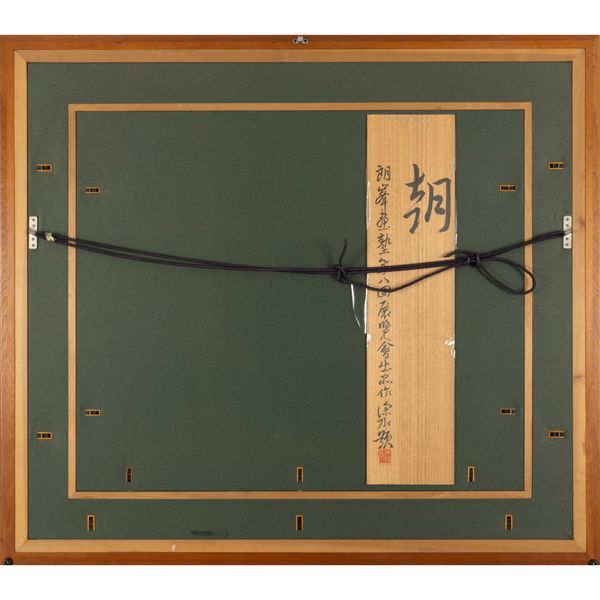
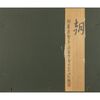
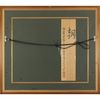
When this bijin-ga (pictures of beautiful woman) was painted in 1938, Ito Shinsui is said to have been deeply inclined toward early ukiyo-e; however, the present work instead evokes the refined atmosphere of the Matsuura screens.Shinsui is also known to have favored butterfly motifs, which are incorporated into the yukata depicted here. The furnishings, including the ear basin (mimidarai), are adorned with gold maki-e, and the delicate rendering of the scooped water spilling over is executed with remarkable precision.The depiction of morning glories appears to draw upon the stylistic conventions of Momoyama-period screen paintings, contributing to an overall sense of quietude throughout the composition.In the upper right of the composition appears the inscription “Shinsui hitsu, Shikun-tei”, beneath which is a square white seal reading “Geppaku Sansō.” “Shikun-tei” was the artist’s studio name and was reserved for particularly accomplished bijin-ga, suggesting that this work may be regarded as an exceptional piece.The seal “Geppaku Sansō” refers to Shinsui’s studio residence, which, until the prewar period, was located north of the Ikegami Plum Garden on the approach to Ikegami Honmon-ji Temple. This studio also functioned as the Rōhō Art School (Rōhō Gajuku).Originally mounted as a hanging scroll, the present work retains the original box lid for the scroll, which is now affixed to the reverse of the frame. Based on the inscription on the box lid, the work can be identified as having been exhibited in the 8th Rōhō Gajuku Exhibition.
CONDITION REPORT