

Public Art Auction
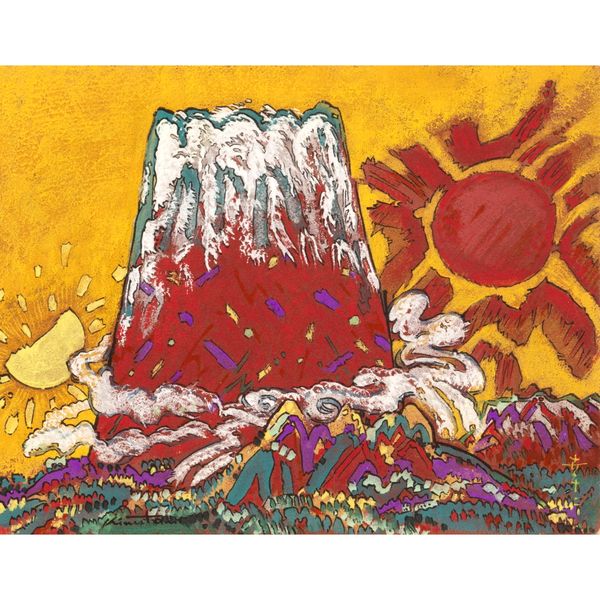
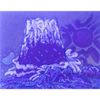
LOT 050
KINUTANI Koji
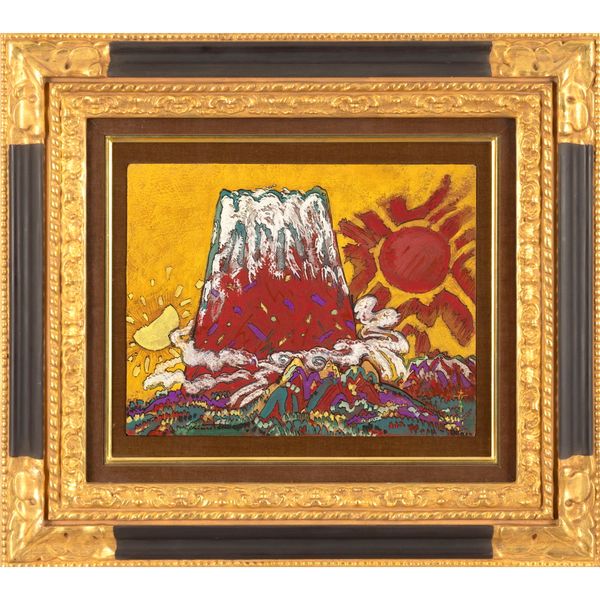
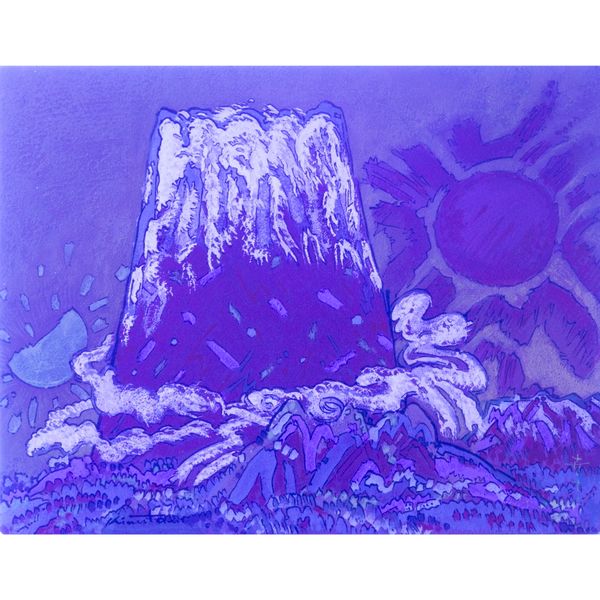
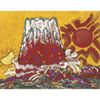
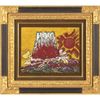
SEA OF CLOUDS, SUN, MOON, MT. FUJI
| Technique | mixed media on canvas mounted on panel |
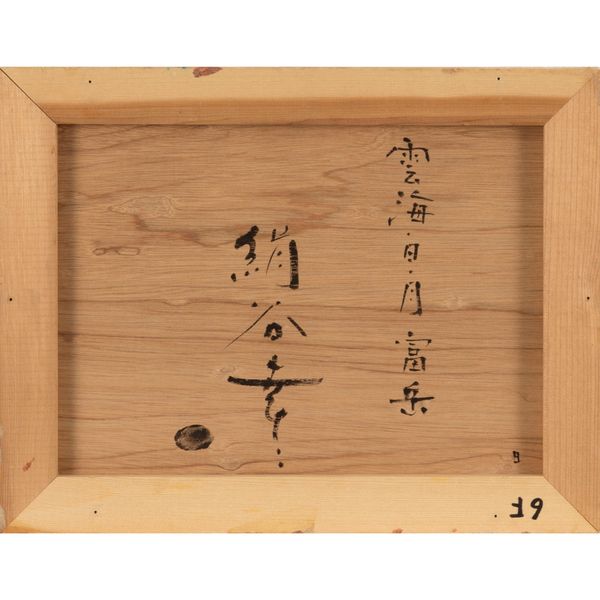
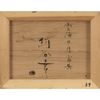
| Signature | signed on the lower left and lower right; signed and titled with one thumbprint on the reverse |
| Frame | framed |
| Size | 38.1×41.0 cm |
| PROVENANCE | Private collection, Japan, acquired directly from the artist;Thence by descent to the present owner. |
HIGHLIGHT
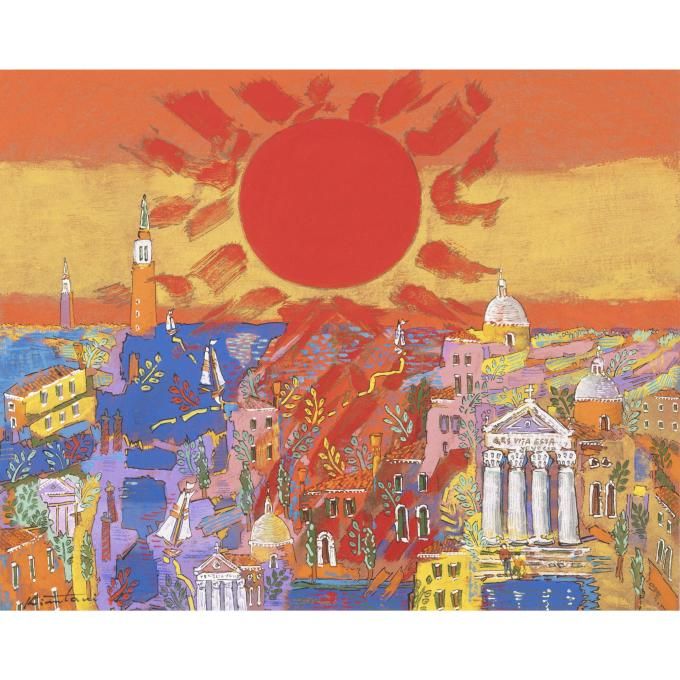
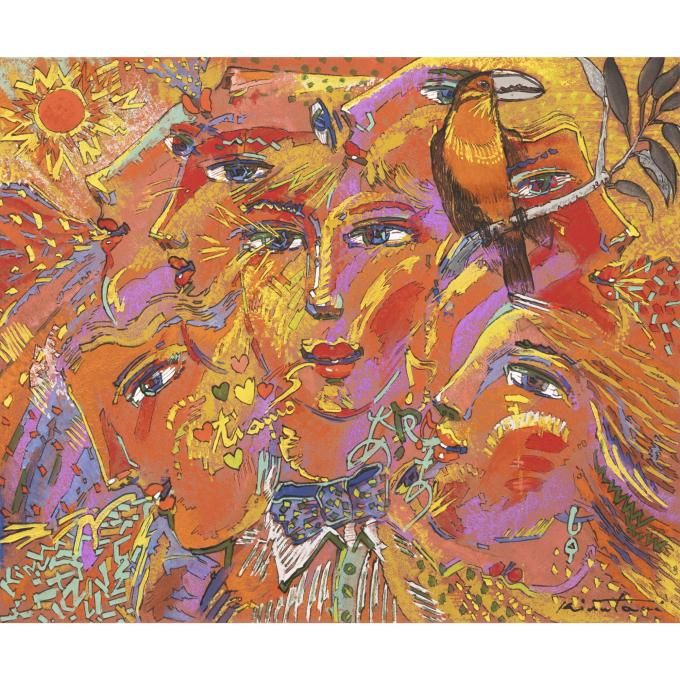
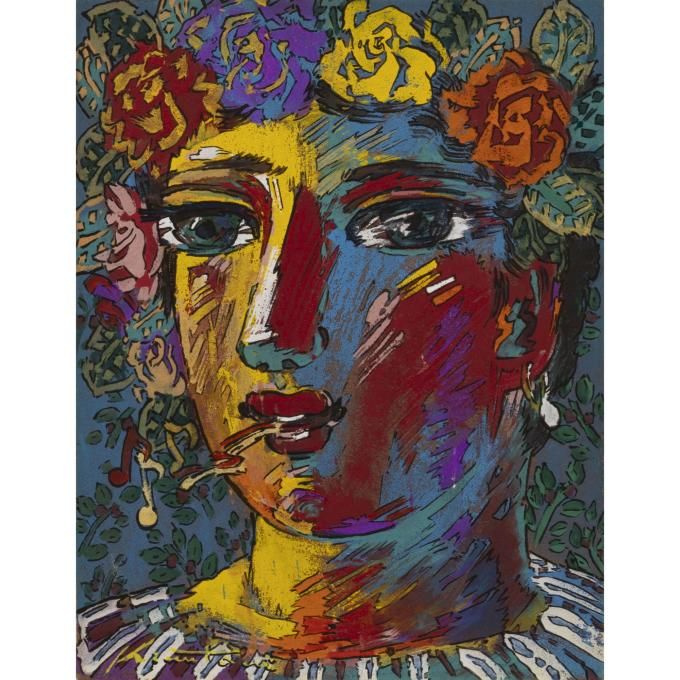
Koji Kinutani is a Japanese Western-style painter born in Nara Prefecture in 1943. In 1962, he entered the Department of Oil Painting at the Faculty of Fine Arts, Tokyo University of the Arts. While still a student in 1964, he was profoundly moved by the surviving murals of the Kondō Hall during a study trip on classical Japanese art to Hōryū-ji. In 1966, he entered the university’s graduate program, where he researched the classical fresco technique. Reinterpreting traditional fresco methods through a contemporary lens, Kinutani became known for his vivid colors, powerful brushwork, and dynamic depictions of the human figure. He received the prestigious Yasui Award, considered a gateway honor for emerging Western-style painters in Japan, at the youngest age in its history. Highly regarded as a member of the Japan Art Academy and a Person of Cultural Merit, Kinutani is recognized as one of the leading figures in contemporary Japanese painting.</br>The motifs appearing in the four works offered in this sale — “Mount Fuji,” “the sun,” “women,” and “roses” — are all recurring themes that Kinutani has explored throughout his career.Among them, Mount Fuji became a particularly important subject during his mature period. For Kinutani, Fuji was not merely a symbol of Japan, but also a source of immense energy and vitality. The Mount Fuji depicted in his works takes on many different expressions: bold colors such as red, gold, and blue dominate the compositions, while mystical motifs including dragons and phoenixes are sometimes incorporated.Lot 050, "SEA OF CLOUDS, SUN, MOON, MT. FUJI", presents a majestic red Fuji under the title “Fugaku.” Behind the mountain, the sun and moon are positioned as though facing one another. The sea of clouds surrounding the mountain undulates rhythmically, and the coexistence of the sun and moon — elements that do not ordinarily appear simultaneously — creates a fantastical world transcending reality.This overwhelming sense of scale and festivity is equally evident in the large sun depicted in Lot 051. Occupying the upper half of the composition, the radiant sun powerfully illuminates the city of Venice. Inscribed on the church at the lower right is the phrase “ARS VITA ESTA,” a Latin expression meaning “Art is Life,” well known as Kinutani’s personal motto. Indeed, the phrase was also used as the title of an exhibition held at the Koji Kinutani Tenku Art Museum in July 2021 in Umeda. Even without the word “VENETIA” inscribed nearby, the architecture and scenery clearly evoke the famous city of water, Venice. Although the scene represents the morning sun, the brilliantly colored cityscape reveals Kinutani’s passion inspired by Italian art.Another important theme in Kinutani’s oeuvre is “love,” to which he devoted numerous works. A work bearing the same title as Lot 052, "LOVE’S TRANSIENCE", is also held in the collection of the Nichido Museum Foundation. That work was created in 1987 and was exhibited the following November at the exhibition "Love, Poetry and Eros: Koji Kinutani Exhibition" held at Fujii Gallery in Ginza. In July 1989, it toured various locations throughout Japan as part of the 3rd Biennale of Figurative Painting, and in recent years it has continued to appear in exhibitions focusing on female figures and Venice. The present Lot 052, "LOVE’S TRANSIENCE (II)", is believed to have been created as a continuation of that earlier work. While the use of color, the number and arrangement of faces, and the overall structure closely resemble the earlier composition, the words and symbols depicted here introduce a new development. At the upper left appears Kinutani’s characteristic energetic sun; in the center is the Italian phrase “ti amo,” meaning “I love you”; and at the lower right is a woman singing in Japanese. The work layers together a spirit that values passion, a longing for Italy as the artist’s creative origin, and a distinctly Japanese sensibility, resulting in a richly multilayered composition. The rhythmic arrangement of the image conveys both fluidity and the fleeting nature of passing time, while simultaneously evoking a celebratory sense of exaltation.Finally, Kinutani also designed the official poster for the 1998 Winter Olympics. Titled "Goddess of the Silver Peaks", the work is connected to an earlier composition, "Young Girl with Floral Adornment", depicting a young woman wearing roses in her hair. Lot 053, "Decorated Woman With Flowers", offered here, may likewise be understood as part of that same lineage. The composition — with the right half of the woman’s face illuminated and adorned with flowers — shares characteristics with the earlier work. However, compared to its predecessor, the facial features appear distinctly more mature, and rather than smiling toward the viewer, the woman gazes resolutely into the distance with a powerful expression. Moreover, whereas the earlier work featured only several roses decorating part of the head, in the present composition the floral adornment envelops the entire head, dramatically heightening its sense of splendor. In the expression of the woman gazing toward the light are embodied dreams and hopes for the future, love for humanity, and the radiance of life itself.