

Public Art Auction
LOT 041
Bernard BUFFET
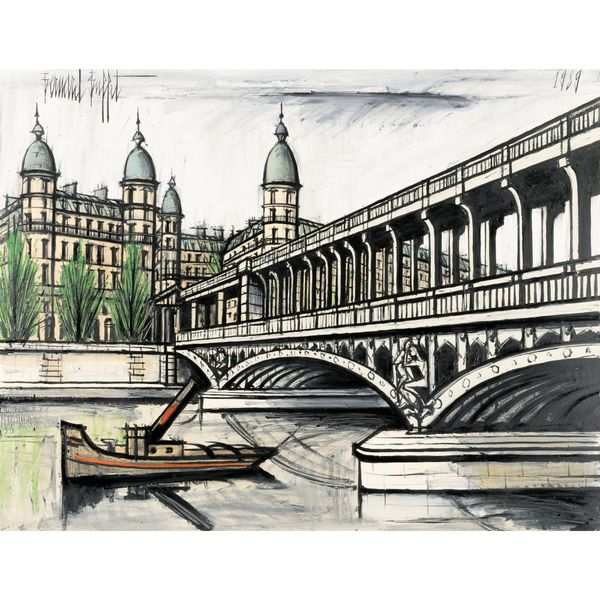
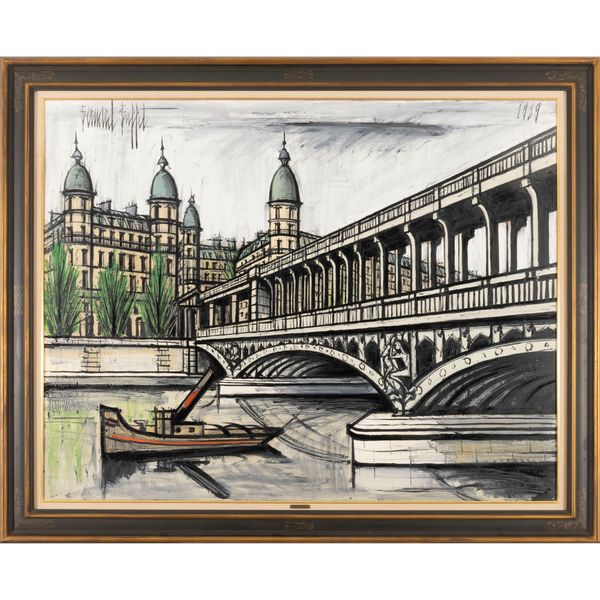
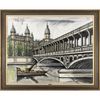
LE PONT BIR-HAKEIM (BIR-HAKEIM BRIDGE)
| Technique | oil on canvas |
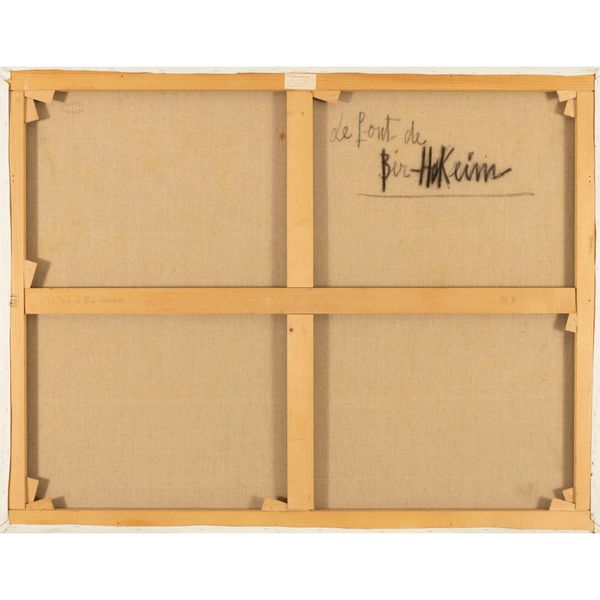
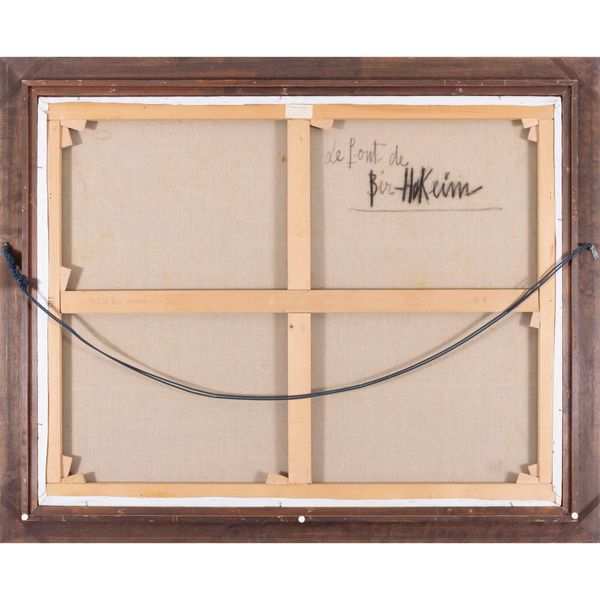
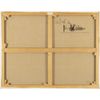
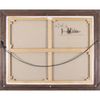
| Signature | signed on the upper left; dated on the upper right; titled with "galerie tamenaga" label affixed to the frame reverse |
| Frame | framed |
| Size | 114.0×146.0 cm |
| Year of the work | 1989 |
| Certificate | This work is recorded in Maurice Garnier Archives. Céline LEVY has confirmed the authenticity of this work. |
| Literature | Yann Le Pichon," Bernard Buffet Vol. 3: 1982–1999", Maurice Garnier, Paris, 2007, p. 213 & 230, no. 1044 |
| PROVENANCE | Est-Ouest Auctions, 13 June 1995, lot 325The present owner acquired the work at the above sale |
HIGHLIGHT
Born in France, Bernard Buffet was one of the leading figurative painters representing postwar France. At the age of fifteen, he entered the École Nationale Supérieure des Beaux-Arts in Paris, and at his first solo exhibition in 1947, the Musée National d’Art Moderne acquired one of his still-life paintings for its collection. The following year, at only twenty years old, he received the prestigious Prix de la Critique and gained a level of fame comparable to that of Pablo Picasso, earning widespread recognition for his talent at a remarkably young age.
Many of Buffet’s early works are characterized by subdued colors, while his sharp contour lines and restrained palette evoke the anxiety and uncertainty that lingered after the Second World War. Just as his portraits often convey sorrowful expressions and emotional exhaustion, the cityscapes he painted are imbued with stillness and melancholy, qualities that strongly resonated with the people of France at the time.
Paris, the capital of art, served not only as one of Buffet’s principal centers of activity but also as an essential motif in his landscapes. Over the course of several decades, he repeatedly depicted the streets and monuments of Paris. The present work was executed in 1989, during the artist’s later years. Through a lifetime of revisiting the same subjects, Buffet’s paintings gradually became richer in color, and particularly in the late 1980s he produced numerous views of Paris. The year 1989 was especially significant in this regard, as he intensively created works featuring celebrated landmarks such as the Eiffel Tower and the Seine, as well as architectural subjects reflecting both the tradition and modern development of the city.
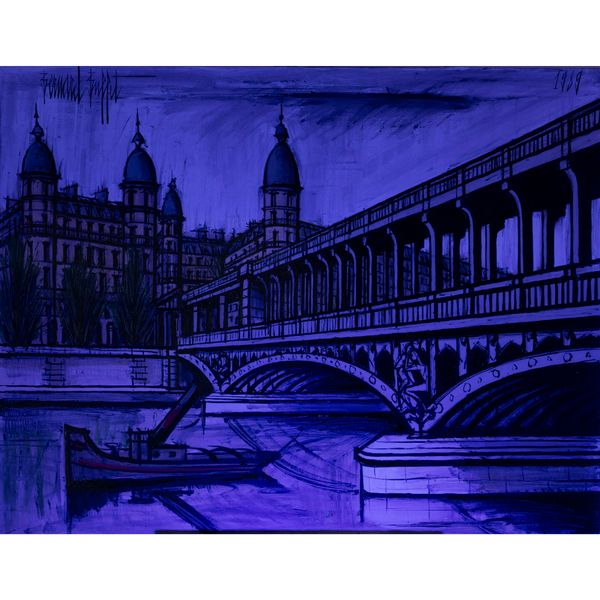
In this composition, the bridge rendered in strong linear perspective to create depth across the picture plane is the Pont de Bir-Hakeim, which connects the 15th and 16th arrondissements of Paris. Spanning the Seine, the bridge has a two-tiered structure: the lower level accommodates vehicles and pedestrians, while the upper level carries the tracks of Paris Métro Line 6. Originally constructed as a pedestrian bridge, it was rebuilt in conjunction with the completion of the Métro in 1900. The supporting pillars are adorned with sculptures symbolizing “Science,” “Labor,” “Electricity,” and “Commerce.” Although set beneath an overcast sky, the vivid green reflections shimmering on the water and the bright red accents of the boats introduce striking touches of color, revealing a confidence unique to Buffet’s later years and distinct from his earlier works. Moreover, Buffet’s signature bold and sharply defined black lines no longer evoke the melancholy of his youth, but instead project a sense of strength and vitality.